Mallory Knox is portrayed as both a partner in violence and an individual shaped by severe trauma, unlike Mickey, whose violence is framed as ideological and charismatic. Mallory’s background includes explicit abuse and neglect. The film presents her as a survivor of a deeply dysfunctional environment, which complicates the interpretation of her behavior. Despite this contextual framing, Mallory actively participates in repeated acts of extreme violence and demonstrates sustained disregard for the lives and safety of others.
The following image captures Mallory during one of the film’s stylized sequences, reflecting the composed and performative demeanor that often accompanies her participation in violence.
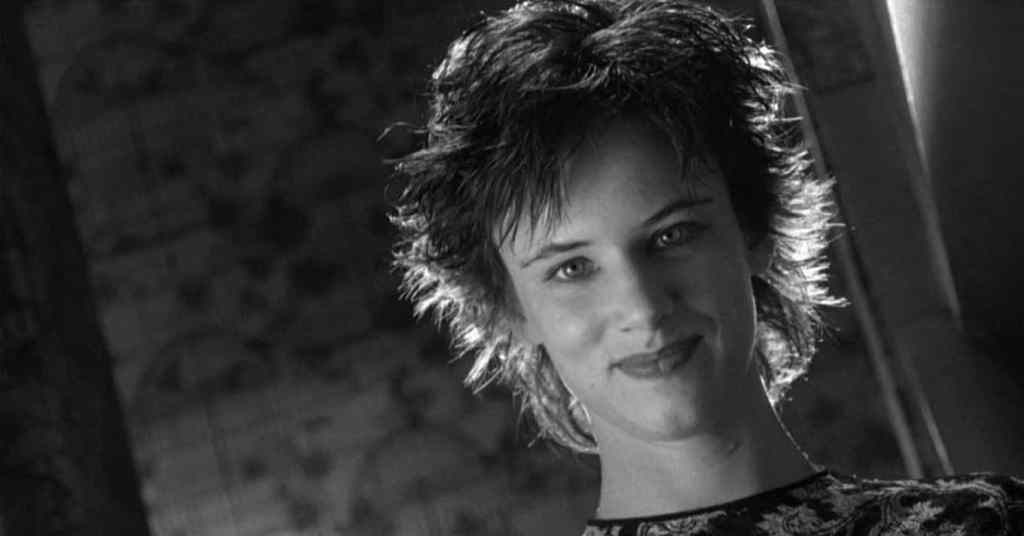
Throughout the film, Mallory’s expressions and demeanor often contrast sharply with the severity of her actions. Her calm, controlled presentation during violent encounters reinforces themes of emotional detachment and sustained disregard for others. While these behaviors align with traits associated with Antisocial Personality Disorder, the film’s aesthetic framing romanticizes and stylizes her violence. By blending trauma narrative with rebellious spectacle, the portrayal complicates clinical interpretation and reinforces gendered stereotypes about female antisocial behavior.
From a behavioral perspective, Mallory exhibits several traits associated with Antisocial Personality Disorder. She engages in chronic rule violations, aggressive behavior, and shows minimal remorse for her actions. Her emotional responses often appear detached or performative, particularly during violent encounters. While her traumatic history may contribute to her psychological development, her continued participation in harm reflects persistent antisocial patterns rather than isolated reactive behavior.
The film’s portrayal of Mallory blends antisocial traits with a victim narrative and romanticized rebellion. Her violence is frequently stylized and framed as empowerment or liberation from past abuse. This narrative choice complicates diagnostic interpretation. Trauma may increase vulnerability to certain maladaptive behaviors, but ASPD requires enduring patterns that extend beyond situational reaction. The film merges trauma, agency, and spectacle, making it difficult to separate psychological realism from thematic symbolism.
Mallory’s depiction contributes to broader media patterns in which female antisocial behavior is either sexualized, romanticized, or explained entirely through victimization. While trauma is a significant risk factor in the development of personality pathology, equating it directly with violent criminality oversimplifies complex psychological processes and reinforces deterministic assumptions.
 Inside ASPD: Facts, Fiction, and Impact