The film Natural Born Killers presents a stylized and hyperbolic portrayal of violence through its central characters, Mickey and Mallory Knox. The narrative follows the couple as they embark on a cross-country killing spree, gaining media notoriety while evading law enforcement. The film intentionally blurs the line between satire and social commentary, critiquing media sensationalism and society’s fascination with violent criminals.
Within the context of Antisocial Personality Disorder, the characters exhibit several behaviors consistent with diagnostic features of the disorder, including impulsivity, aggression, lack of remorse, and disregard for the rights and safety of others. However, the film amplifies these traits to an extreme degree for narrative and symbolic purposes. The stylized cinematography and exaggerated violence contribute to a portrayal that prioritizes spectacle over clinical realism.
Media Amplification and Cultural Commentary
Beyond its depiction of individual violence, Natural Born Killers functions as a critique of media culture. The film portrays Mickey and Mallory not only as perpetrators of violence but also as products of sensationalized news coverage. Their transformation into celebrity criminals underscores the film’s commentary on society’s fascination with spectacle and notoriety. In this way, antisocial behavior becomes intertwined with themes of media consumption and public obsession.
From a clinical standpoint, this amplification complicates interpretation. While the characters exhibit behaviors consistent with traits associated with Antisocial Personality Disorder, the film exaggerates these features for thematic and stylistic impact. The hyper-stylized editing, rapid tonal shifts, and surreal sequences heighten the emotional intensity of their actions, distancing the portrayal from realistic diagnostic representation.
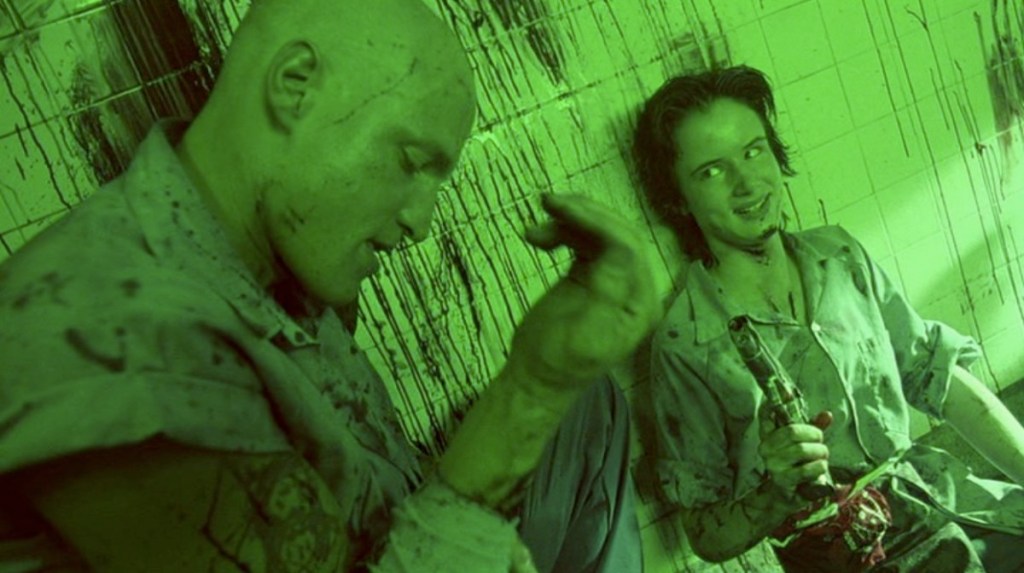
The following scene illustrates the stylized portrayal of violence and media spectacle central to the film’s depiction of antisocial traits.
This scene highlights exaggerated impulsivity, emotional detachment, and glamorized aggression. While certain behaviors resemble diagnostic traits associated with Antisocial Personality Disorder, the portrayal intensifies these characteristics for dramatic and satirical effect. The film prioritizes spectacle and thematic symbolism over clinical accuracy, reinforcing the tendency to equate antisocial traits with extreme and theatrical violence.
Such portrayals may influence public perception by reinforcing the belief that individuals with Antisocial Personality Disorder are inherently violent, sadistic, or beyond rehabilitation. When antisocial traits are consistently linked with sensationalized mass violence, audiences may conflate clinical personality patterns with extreme criminal pathology. This association can contribute to stigma, fear-based misconceptions, and therapeutic pessimism regarding individuals who meet diagnostic criteria.
Transition to Character Analysis
The following subpages examine Mickey Knox and Mallory Knox individually, analyzing their behaviors in relation to diagnostic features of Antisocial Personality Disorder and assessing the accuracy, exaggeration, and cultural implications of their portrayal.
,
 Inside ASPD: Facts, Fiction, and Impact